The Science of Canine Aging
The Science of Canine Aging
Aging in dogs is a gradual biological process characterized by changes in cellular maintenance, metabolic regulation, and tissue resilience. While chronological age progresses uniformly, biological aging reflects cumulative molecular and physiological alterations that vary between individuals.
The Science section provides an educational overview of key biological features associated with aging in companion animals and the framework through which nutritional research evaluates these processes.


The Science
Biological Features of Aging in Dogs
Research in aging biology has identified several interconnected processes associated with advancing age. These features do not represent diseases themselves but describe measurable biological changes observed across species.
Genomic Instability
Over time, cells accumulate DNA damage resulting from replication stress, environmental exposure, and metabolic byproducts. While repair systems remain active, their efficiency may decline with age, contributing to altered cellular function.
Telomere Dynamics
Telomeres are protective structures at the ends of chromosomes. With repeated cell division, telomeres gradually shorten. Telomere length is often studied as a biomarker associated with cellular replicative history, though it does not directly determine lifespan.
Mitochondrial Stress
Mitochondria regulate energy production within cells. Age-related changes in mitochondrial efficiency and reactive oxygen species balance may influence metabolic resilience and tissue function.
Immune System Changes
Aging is associated with shifts in immune regulation, sometimes referred to as immunosenescence or low-grade inflammatory signaling. These changes may affect response efficiency and tissue homeostasis.
Altered Cellular Turnover
Certain tissues — including immune cells, gastrointestinal epithelium, and skin — rely on continuous renewal. Aging may influence the balance between regeneration and cellular stress within these systems.
This overview reflects current understanding in comparative aging biology and provides context for interpreting biomarker-based research in dogs.
Nutrient Demand and Cellular Turnover
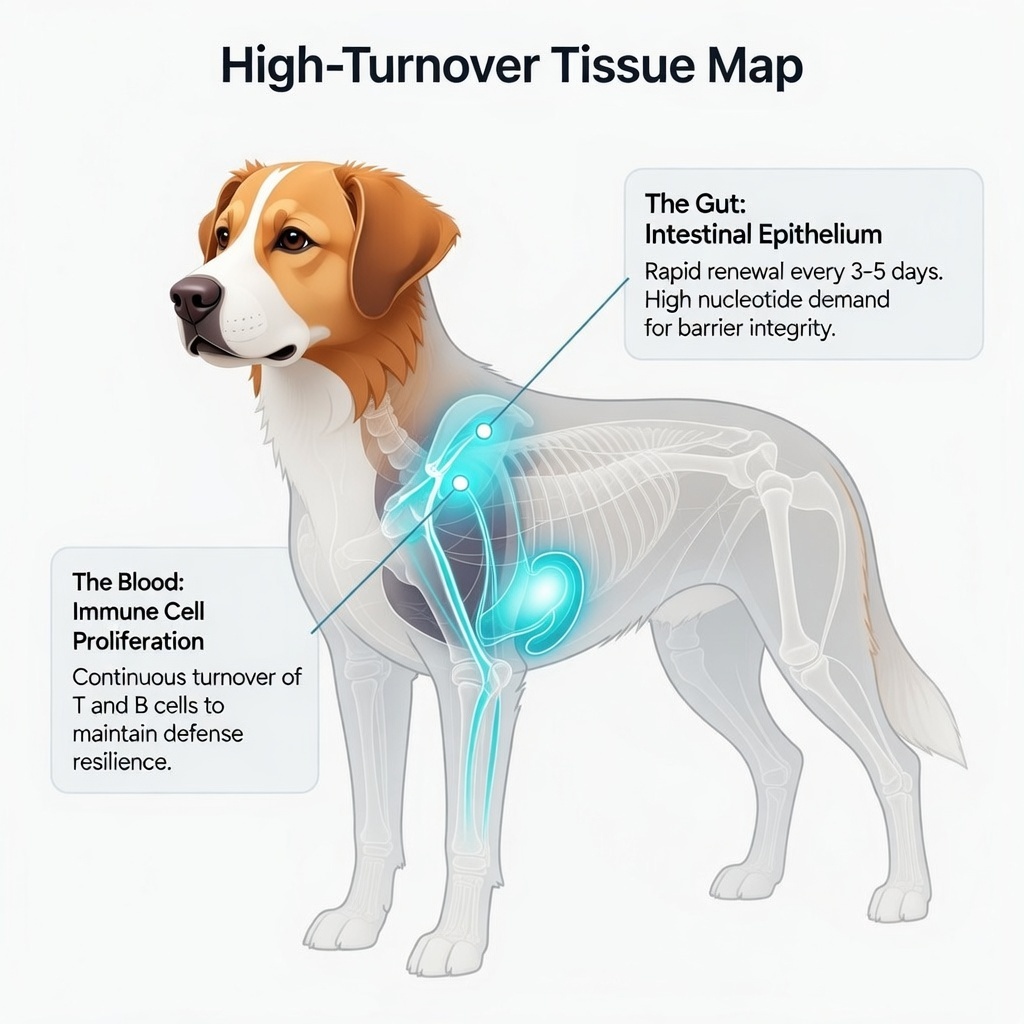
Many physiological systems require constant cellular renewal. Immune cells must proliferate in response to environmental challenges, and intestinal epithelial cells undergo regular replacement to maintain barrier integrity.
These processes depend on coordinated metabolic pathways and substrate availability, including amino acids, lipids, and nucleotides necessary for DNA and RNA synthesis.
With advancing age, metabolic efficiency and repair capacity may be altered. Nutritional geroscience investigates how dietary components interact with these biological systems, particularly in the context of:
-
Importantly, substrate availability does not override genetic or environmental determinants of aging. Rather, it represents one area of scientific inquiry within the broader aging research landscape.
Importantly, substrate availability does not override genetic or environmental determinants of aging. Rather, it represents one area of scientific inquiry within the broader aging research landscape.


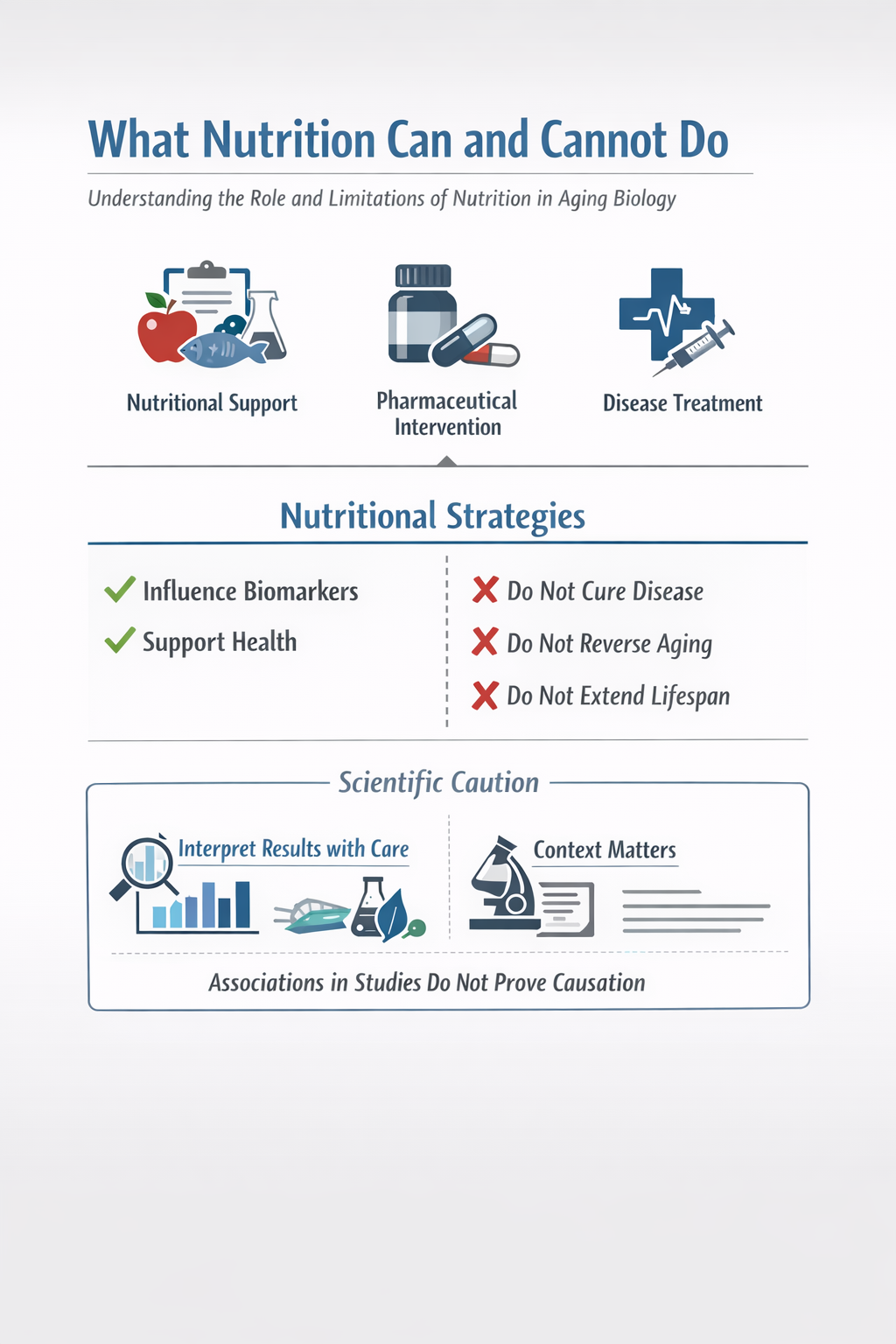
Nutrition plays a foundational role in maintaining physiological function. Adequate dietary support contributes to tissue integrity, metabolic balance, and overall health.
However, it is essential to distinguish between:
Nutritional strategies:
-
The Initiative emphasizes careful interpretation of biomarker findings. Changes observed in controlled studies reflect associations within specific experimental contexts and should not be extrapolated beyond their design parameters.
The Initiative emphasizes careful interpretation of biomarker findings. Changes observed in controlled studies reflect associations within specific experimental contexts and should not be extrapolated beyond their design parameters.
Scientific rigor requires acknowledging both the potential and the limitations of nutritional research in aging biology.
Scientific rigor requires acknowledging both the potential and the limitations of nutritional research in aging biology.